We build enclosures for one very specific tenant
ArachNest exists because jumping spiders keep getting sold the same enclosure as everything else — bearded dragons, ball pythons, tarantulas three times their size. ArachNest is one format, sized for a jumper instead.
Most "universal" terrariums on the market are built around reptiles or large tarantulas: wide floor space, low ceilings, hinged doors that need two hands to latch. A jumping spider doesn't behave like either. It's a small, intensely visual hunter that climbs constantly, builds silk retreats near the roof of its enclosure, and needs airflow more than floor area. ArachNest is sized for how a jumping spider lives — including a taller 12×12×20cm option specifically for arboreal setups.
Why acrylic, and why this one
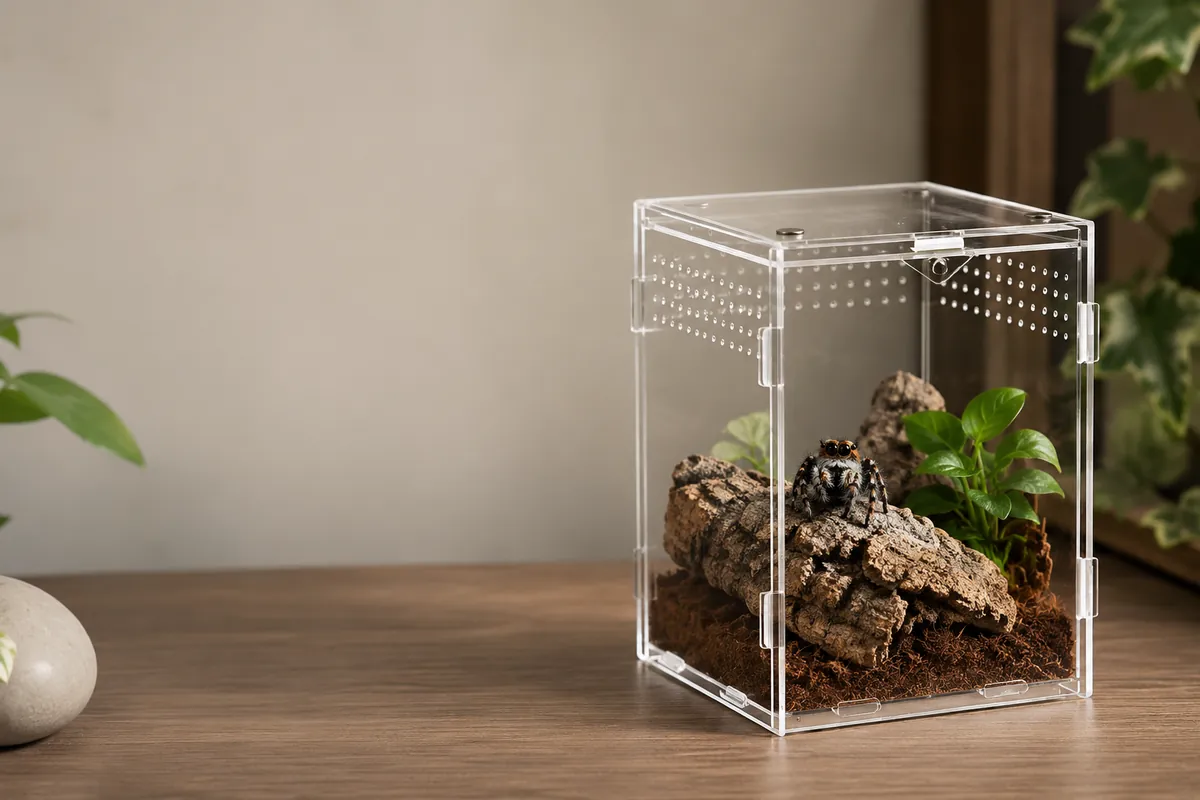
Acrylic is light enough to reposition without stress, shatter-resistant compared to glass, and — done right — clear enough that you're not squinting through a haze to check on your spider. The magnetic lid matters just as much. A jumping spider is fast, curious, and will test any gap the moment you open a lid; a magnetic closure lets you feed or mist the enclosure with one hand while the other stays ready, instead of wrestling a friction-fit door. Buyers notice it too — it's the single most repeated detail across verified reviews, alongside how easy the panels are to assemble out of the box.
This is a home-keeping enclosure, not a museum-grade bioactive vivarium. It won't replace a custom-built bioactive setup for a serious breeding operation. What it does well is give a jumping spider — or another small invertebrate of similar size — a clear, ventilated, secure space that's easy to assemble and easy to see into, at a price that doesn't require justifying a hobby to your household budget.
Sizing it for a jumper, not a menagerie
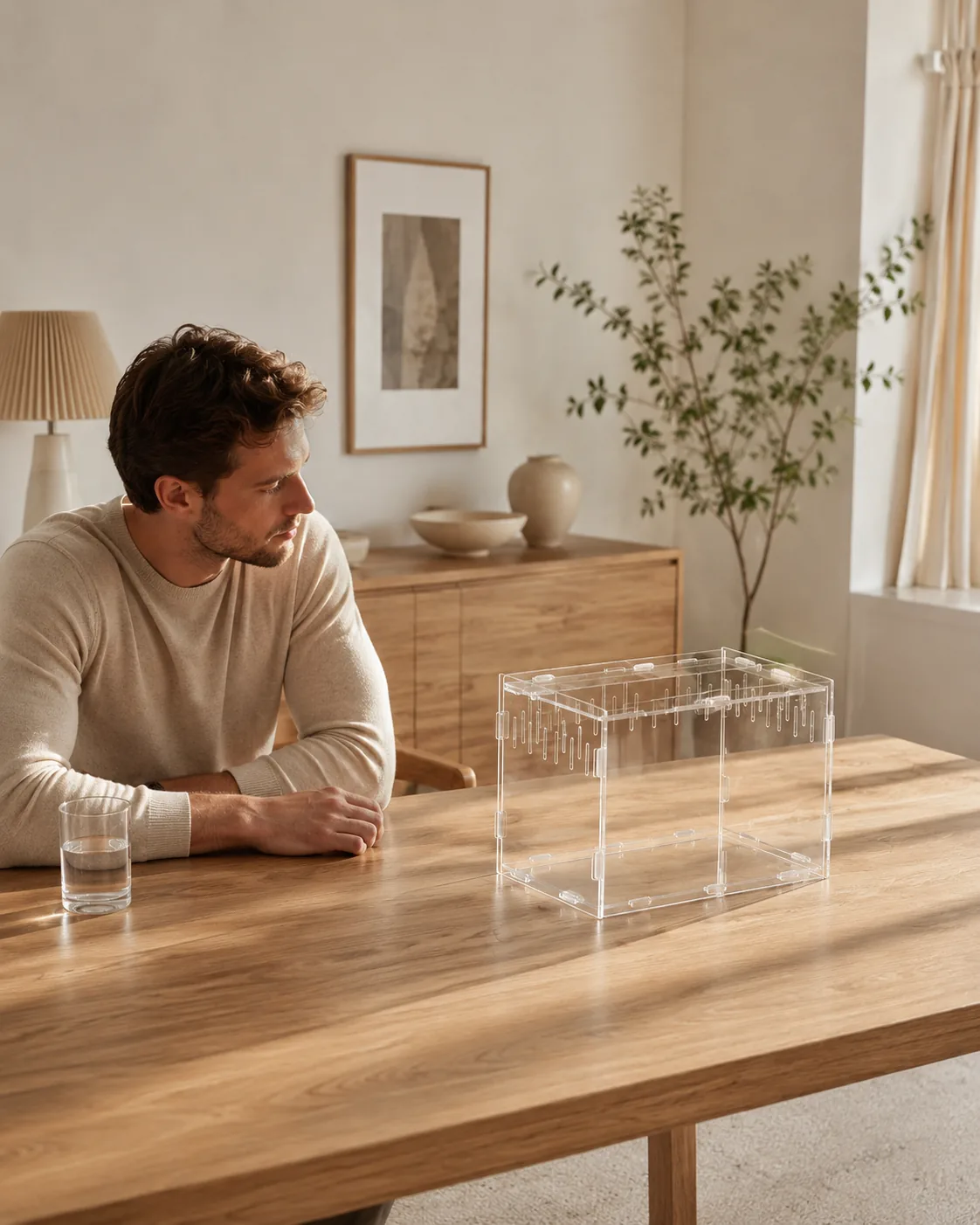
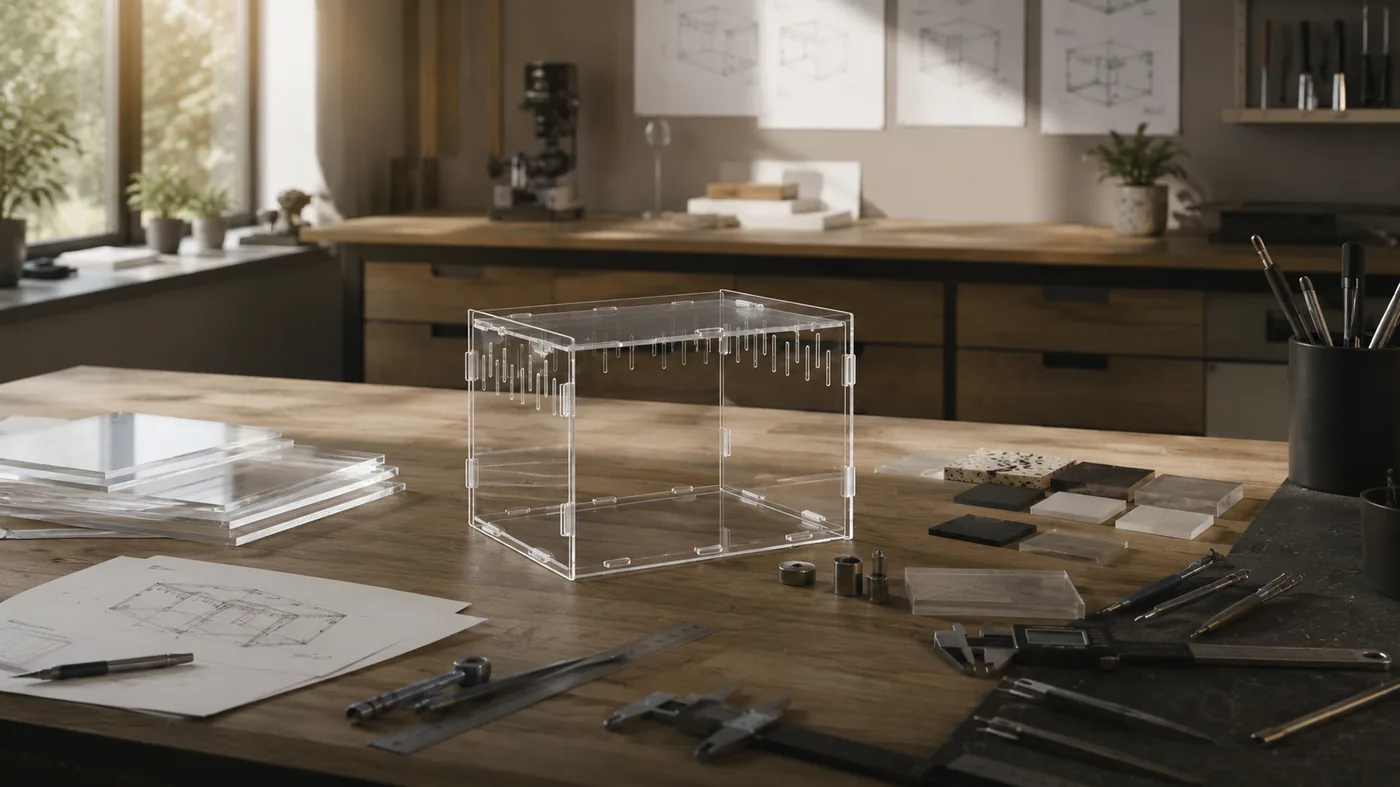
ArachNest comes in three size classes: a 10×10×10cm cube for a single juvenile-to-adult jumping spider or a similarly sized invertebrate, a 12×12×20cm tower for arboreal setups where vertical climbing space matters more than floor area, and a Large offered in two orientations — a tall 15×15×25cm for maximum vertical space, or a wide 25×15×15cm for keepers who want more floor room for décor, live plants, or a slightly larger species. There are no giant formats built for tarantulas or bearded dragons: they don't match what a jumping spider actually needs.
Backed by a 30-day guarantee
Buyers rate ArachNest 4.6 out of 5 across 130 verified reviews. Every order is backed by our 30-day money-back guarantee, so if anything about your enclosure isn't right, we'll make it right.
Care information on this site — substrate, humidity, feeding — reflects common practice among amateur invertebrate keepers, not a professional or veterinary recommendation.