Methodology 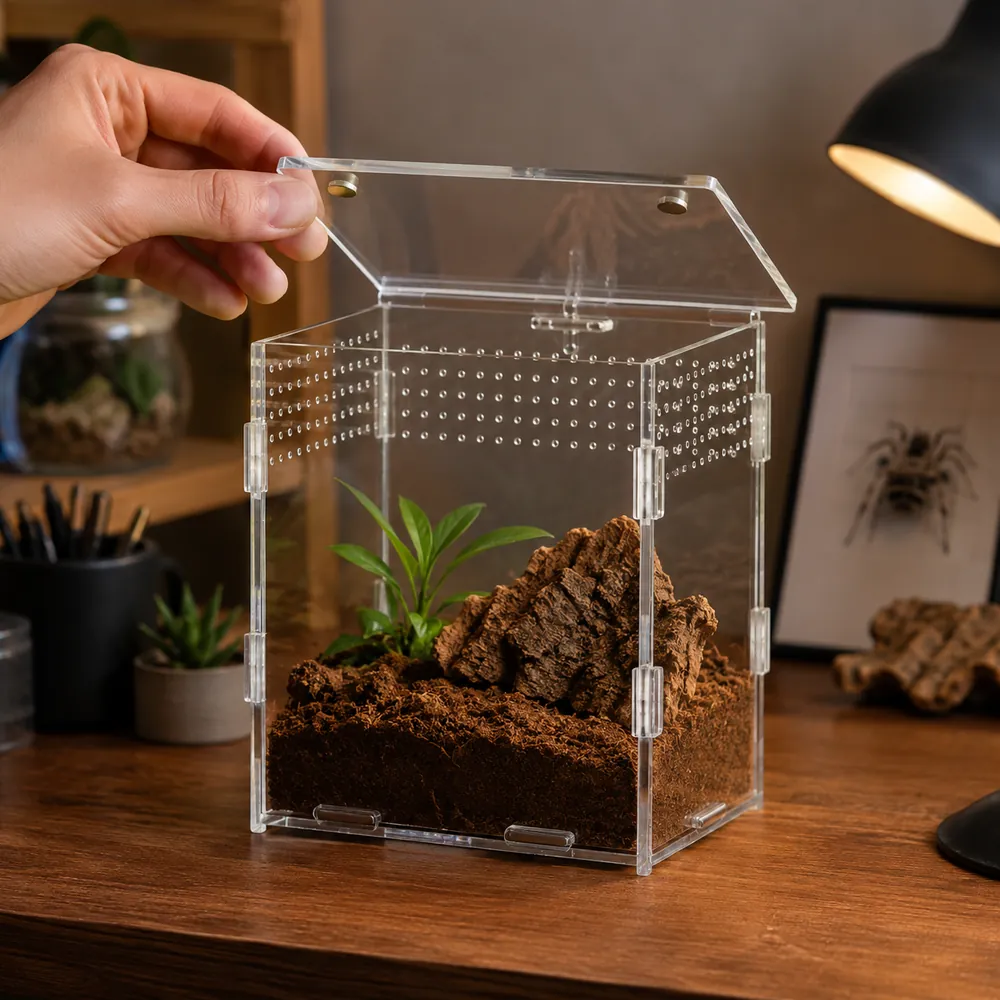
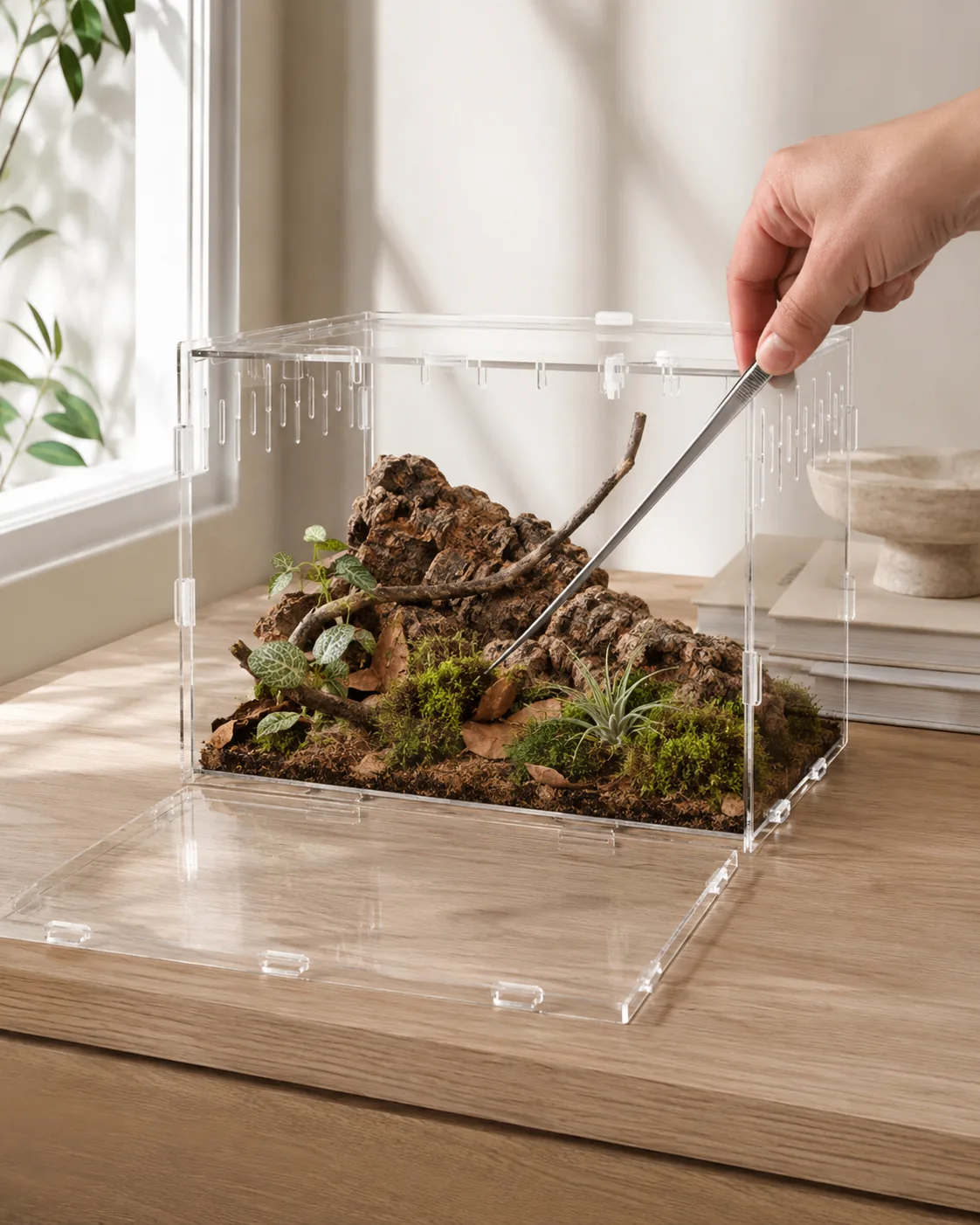
How we test spider enclosures
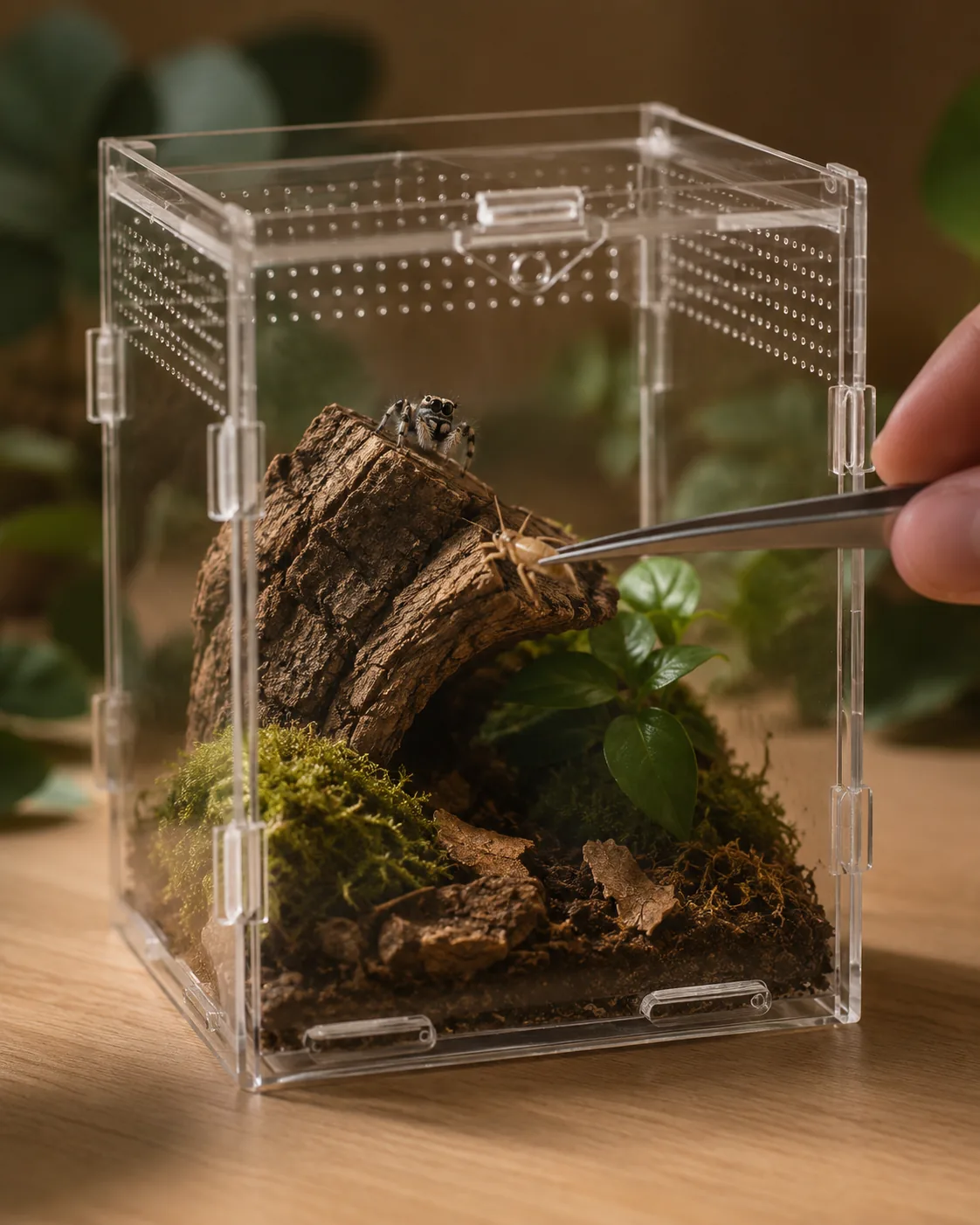
A few things decide whether an enclosure suits a jumping spider once it is living inside. Here is each one, and how ArachNest answers it.
Our criteria
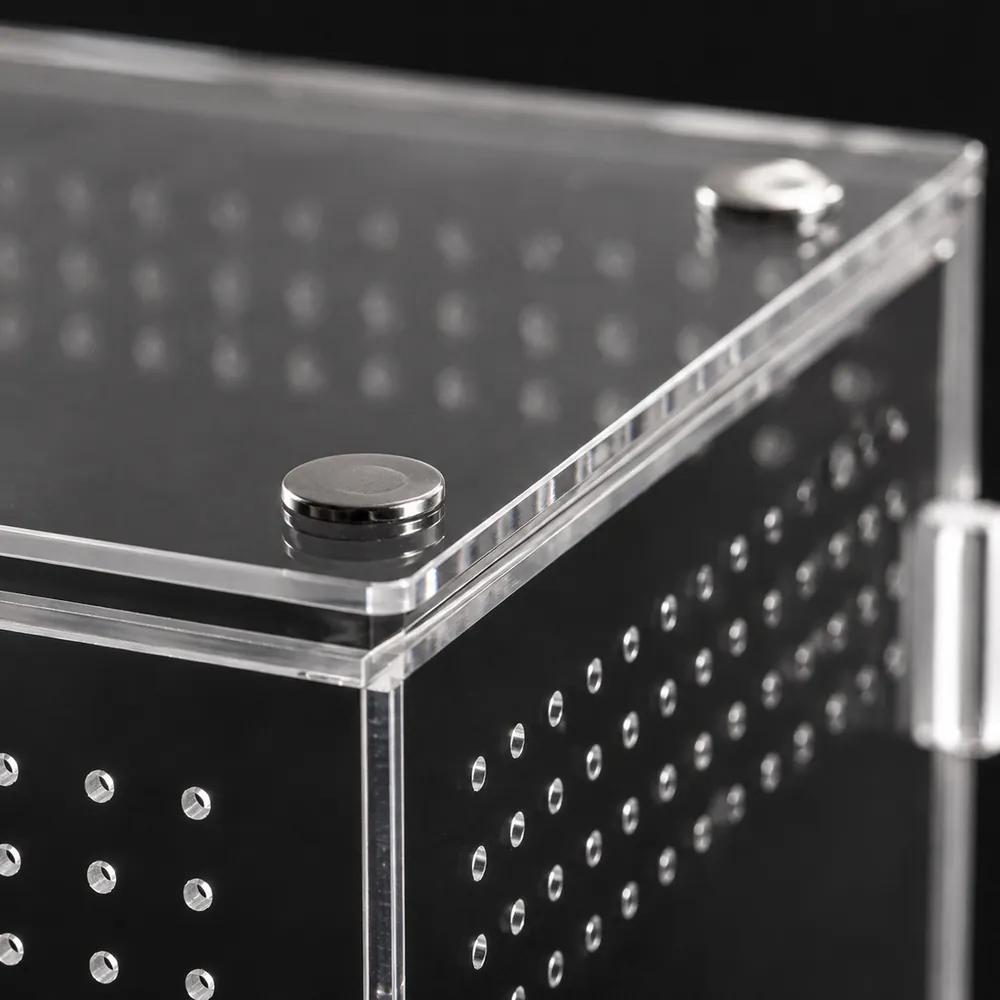
- Ventilation. An enclosure has to exchange air well enough to prevent stagnant, overly humid pockets — a common cause of mold and mite problems in sealed containers. ArachNest enclosures have laser-cut ventilation holes on at least two panels.
- Acrylic clarity. Once the protective film is peeled off, the panels should be genuinely see-through, not hazy or scratched — clarity matters both for observing a visually driven hunter like a jumping spider and for feeding without opening the lid unnecessarily. ArachNest panels are cast acrylic, which buyers describe as "crystal clear once the protective film is removed."
- Ease of assembly. Most buyers open the box and start immediately, so the panels should go together without instructions. ArachNest panels click together without glue or tools, and buyers consistently call this step "easy."
- Magnetic lid security. The lid has to close flush and hold under light pressure — loose enough to open one-handed during feeding, tight enough that a fast-moving jumping spider can't push it open from inside. The ArachNest lid seats flush and holds with a magnetic strip.
- Panel fit & seam quality. Where panels connect, the cut edges should meet in a clean, flush seam that closes properly and holds up to normal handling.
- What this covers. This is a home-keeping enclosure sized for a jumping spider or similarly small invertebrate — not a custom bioactive vivarium built for a serious breeding operation, and not a substitute for species-specific husbandry research.
What this means for you
Care information on this site (substrate, humidity, feeding) reflects common practice among amateur invertebrate keepers, never an expert or veterinary guarantee. Every order is backed by a 30-day money-back guarantee, so the risk is on us, not you.