
Acrylic Terrarium: What the Material Actually Gets You
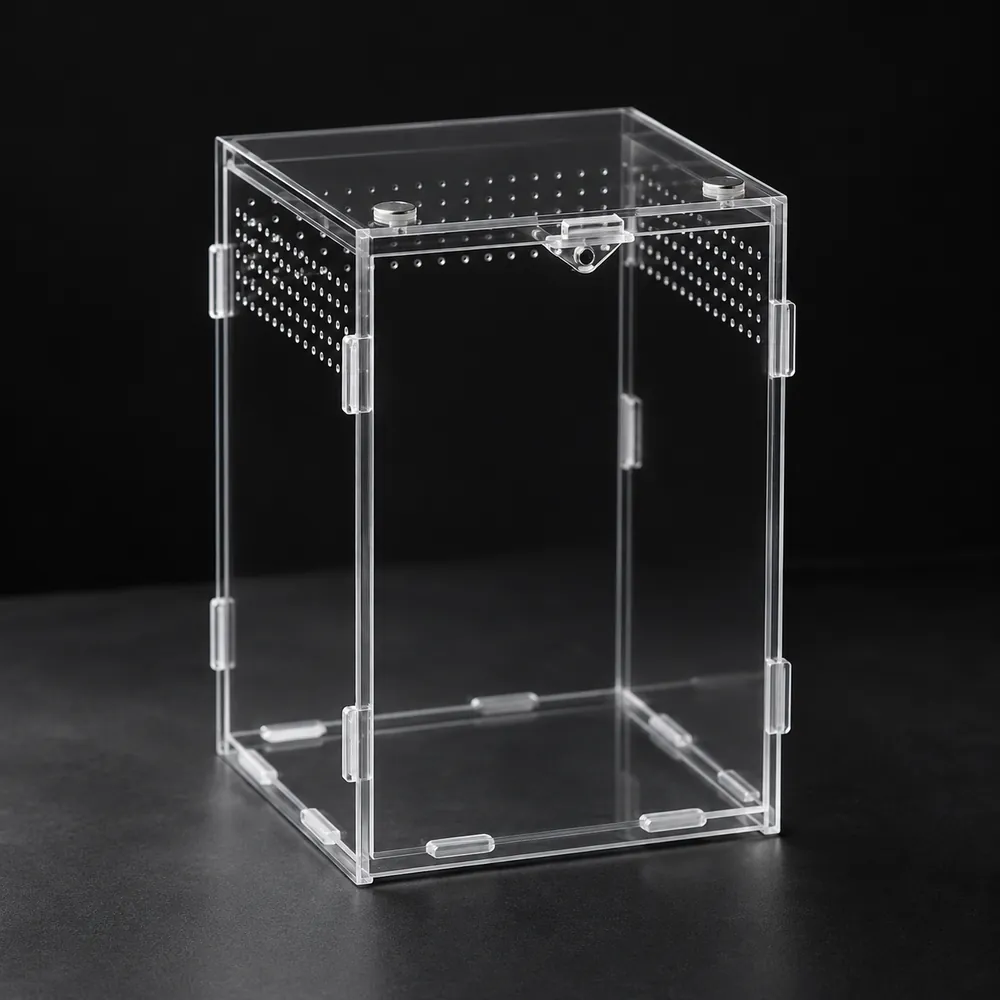
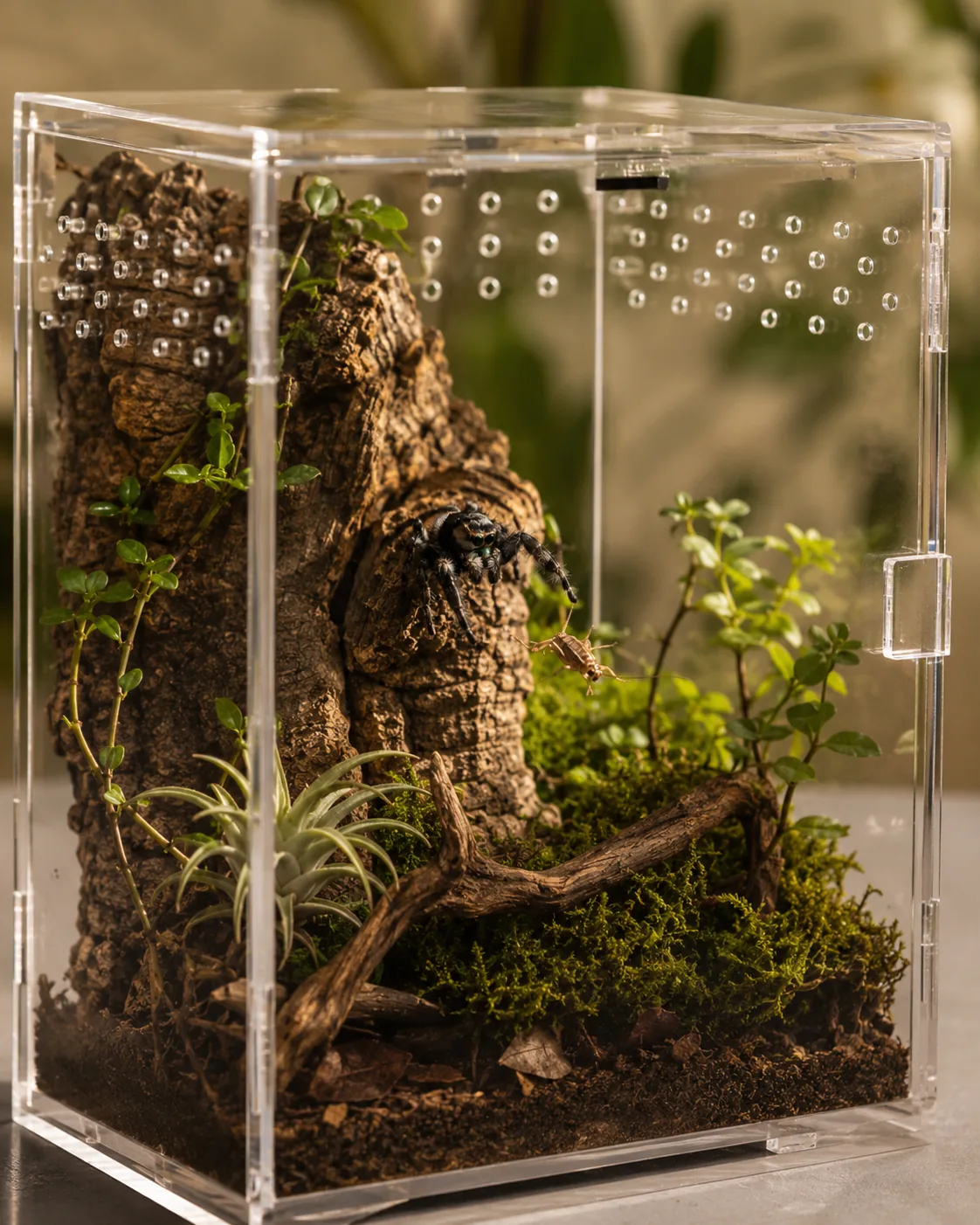
Most terrarium buying guides talk about size and species fit and skip the material entirely, as if glass, acrylic, and plastic were interchangeable. They're not. The panel material changes how the enclosure handles drops, how clearly you can see the animal inside, how you're able to cut ventilation into it, and how it ages over years of cleaning. This page is about that material choice specifically — what cast acrylic is, how ArachNest builds with it, and where it's a better or worse fit than the alternatives.
🚨 Only a few left in stock
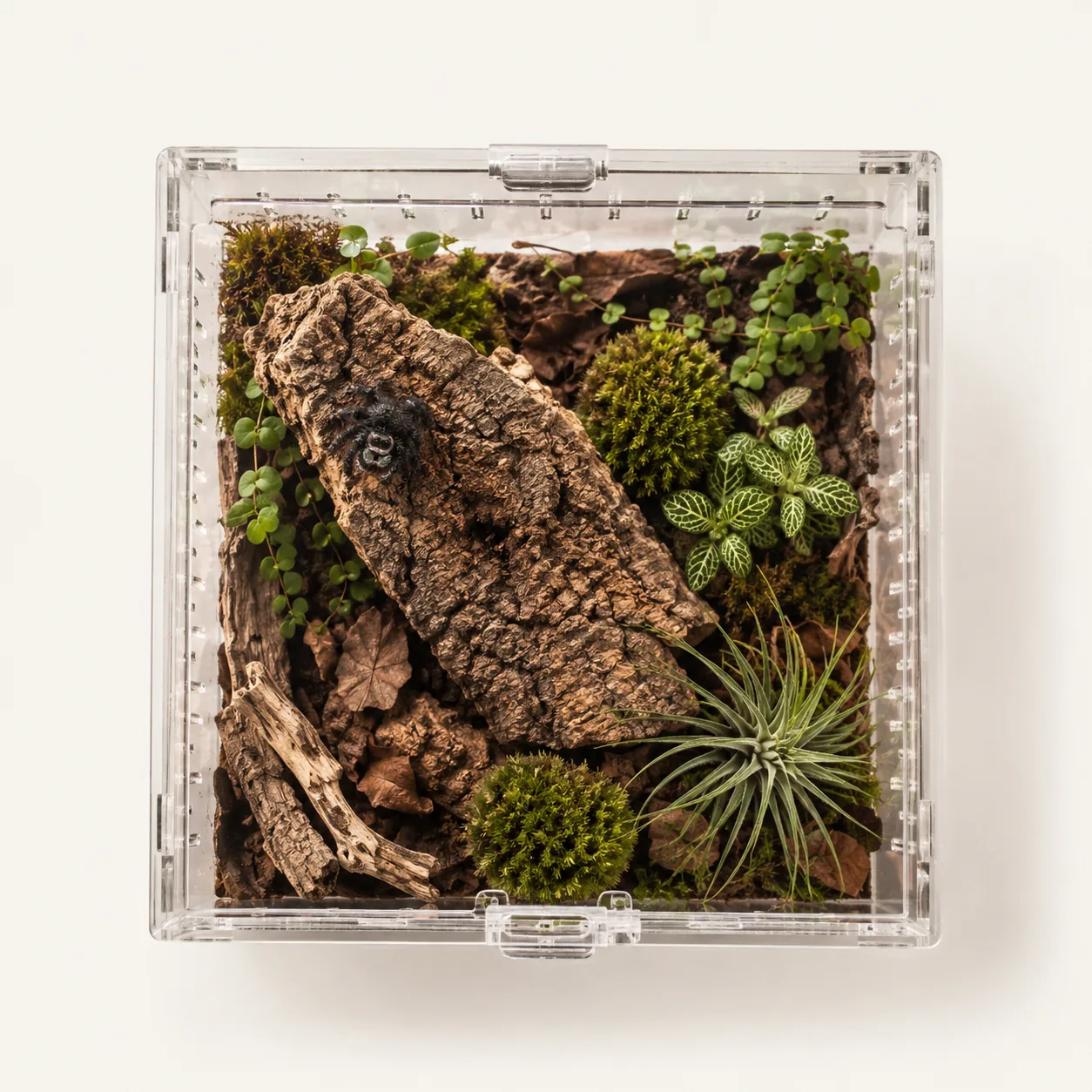
What "acrylic" actually means here
Not all "acrylic" is equal. Cast acrylic is produced by pouring liquid acrylic between glass plates and letting it cure, which gives it better optical clarity and more consistent thickness than extruded acrylic, which is pushed through rollers at high speed and tends to have more internal stress and lower clarity. Cast acrylic is also easier to laser-cut cleanly, which matters directly for ventilation: laser-cut holes or mesh inserts in cast acrylic come out precise and burr-free, where lower-grade extruded sheet can chip or craze at the cut edge.
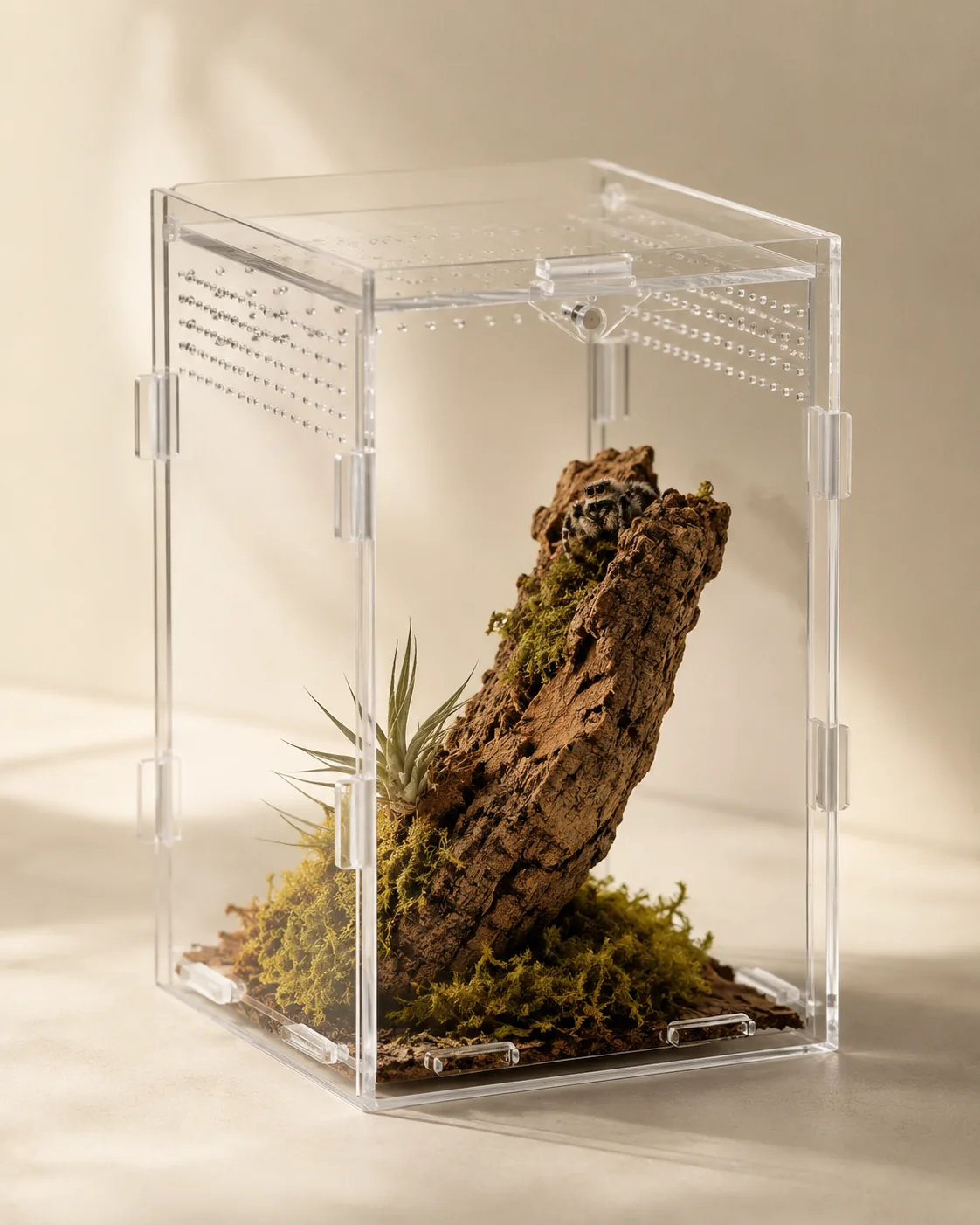
How ArachNest terrariums are built
| Size | Dimensions | Panel material | Lid | Price |
|---|---|---|---|---|
| S | 10 x 10 x 10 cm | Cast acrylic | Magnetic close | $29.95 $39.95 |
| M | 12 x 12 x 20 cm | Cast acrylic | Magnetic close | $44.95 $59.95 |
| L (Tall) | 15 x 15 x 25 cm | Cast acrylic | Magnetic close | $59.95 $79.95 |
| L (Wide) | 25 x 15 x 15 cm | Cast acrylic | Magnetic close | $59.95 $79.95 |
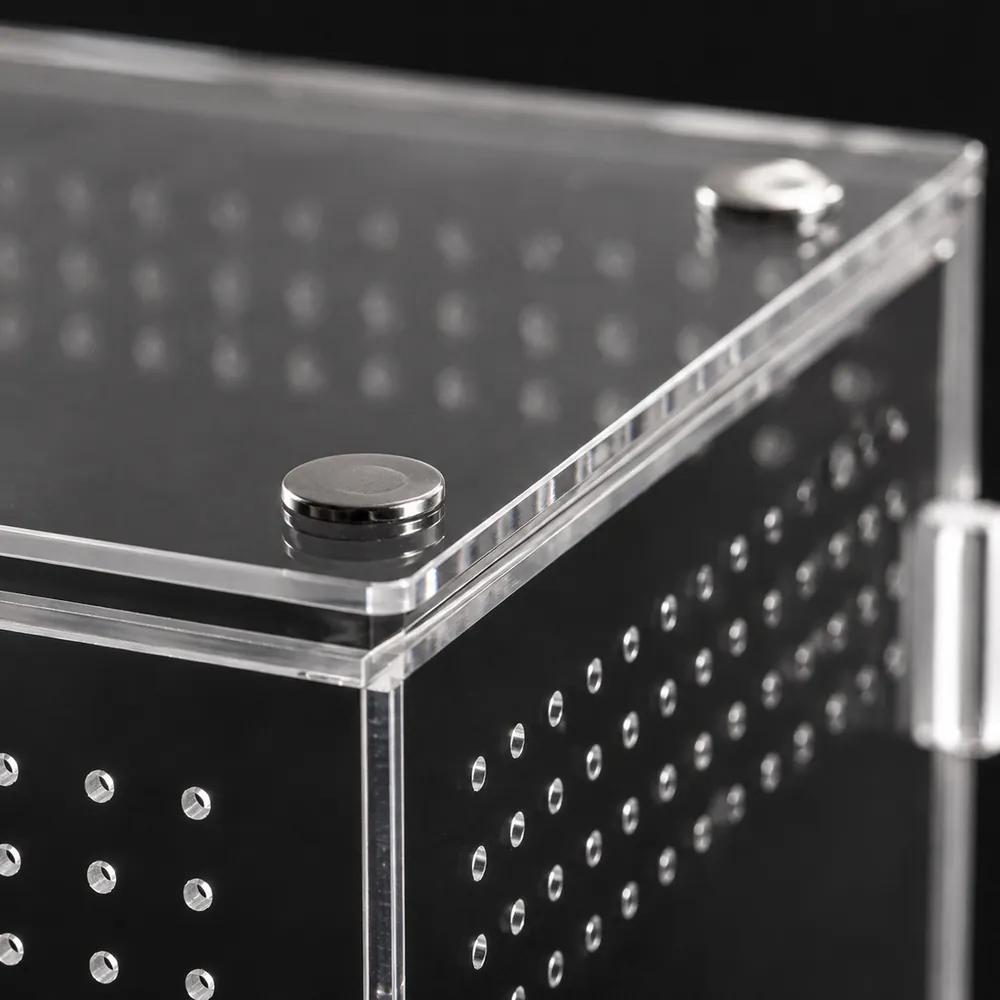
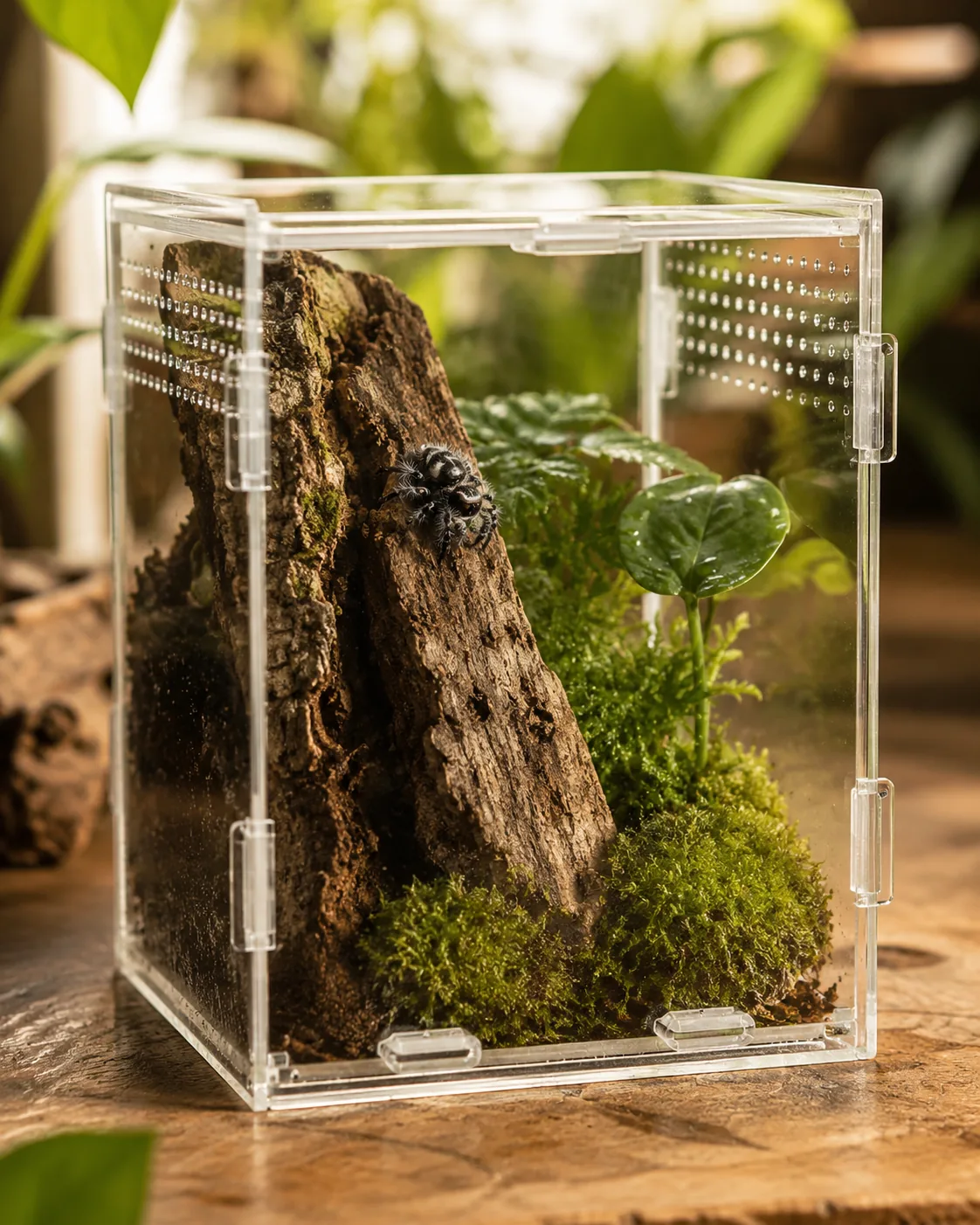
The magnetic lid is a construction detail worth calling out on its own: rather than a friction-fit lid that can warp out of shape or a clip lid you have to force, the magnets hold the lid flush and let you open it with one hand — useful when the other hand is holding a feeding tool. One verified buyer described it directly: "the lid is magnetic," calling out build quality and fast shipping in the same review. Every panel arrives with a protective film that peels off to reveal a genuinely clear finish, which is also mentioned directly in buyer feedback: "is crystal clear once the protective film is removed."
Acrylic vs. glass vs. molded plastic: material by material
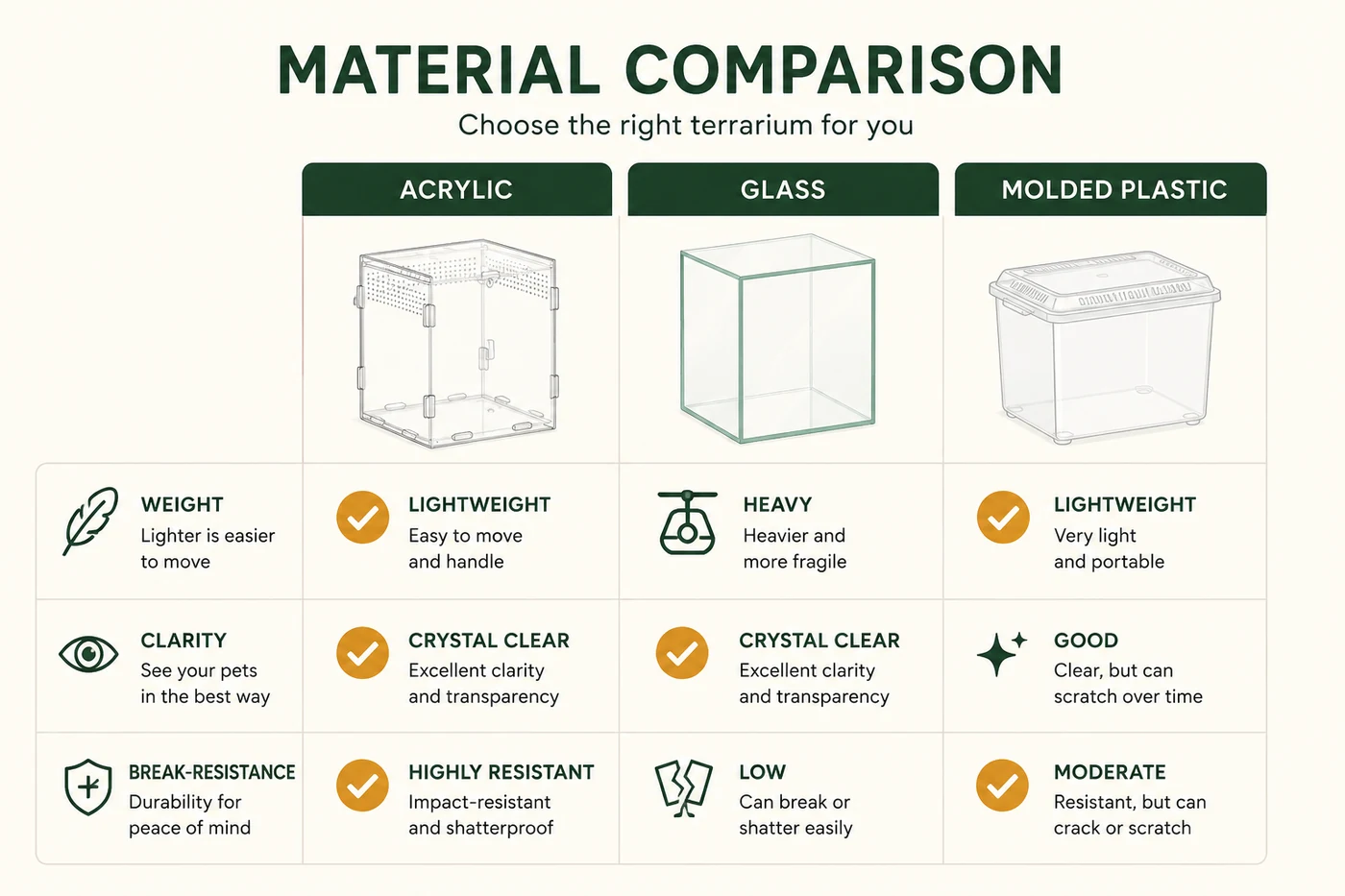
| Property | Cast acrylic | Glass | Molded plastic |
|---|---|---|---|
| Relative weight | Light | Heavy | Very light |
| Shatter risk | Low | High | Very low |
| Optical clarity | High (cast) | High | Low-medium |
| Precision-cut ventilation | Yes (laser-cut) | Difficult | Limited |
| Scratch resistance | Moderate | High | Low |
| UV yellowing risk | Slight, over years | None | Varies |
One material note worth knowing: glass edges out acrylic on long-term scratch resistance, so a soft microfiber cloth and water (rather than paper towels or abrasive pads) is the easiest way to keep panels looking clear for years.
From sheet to enclosure: how the panels come together
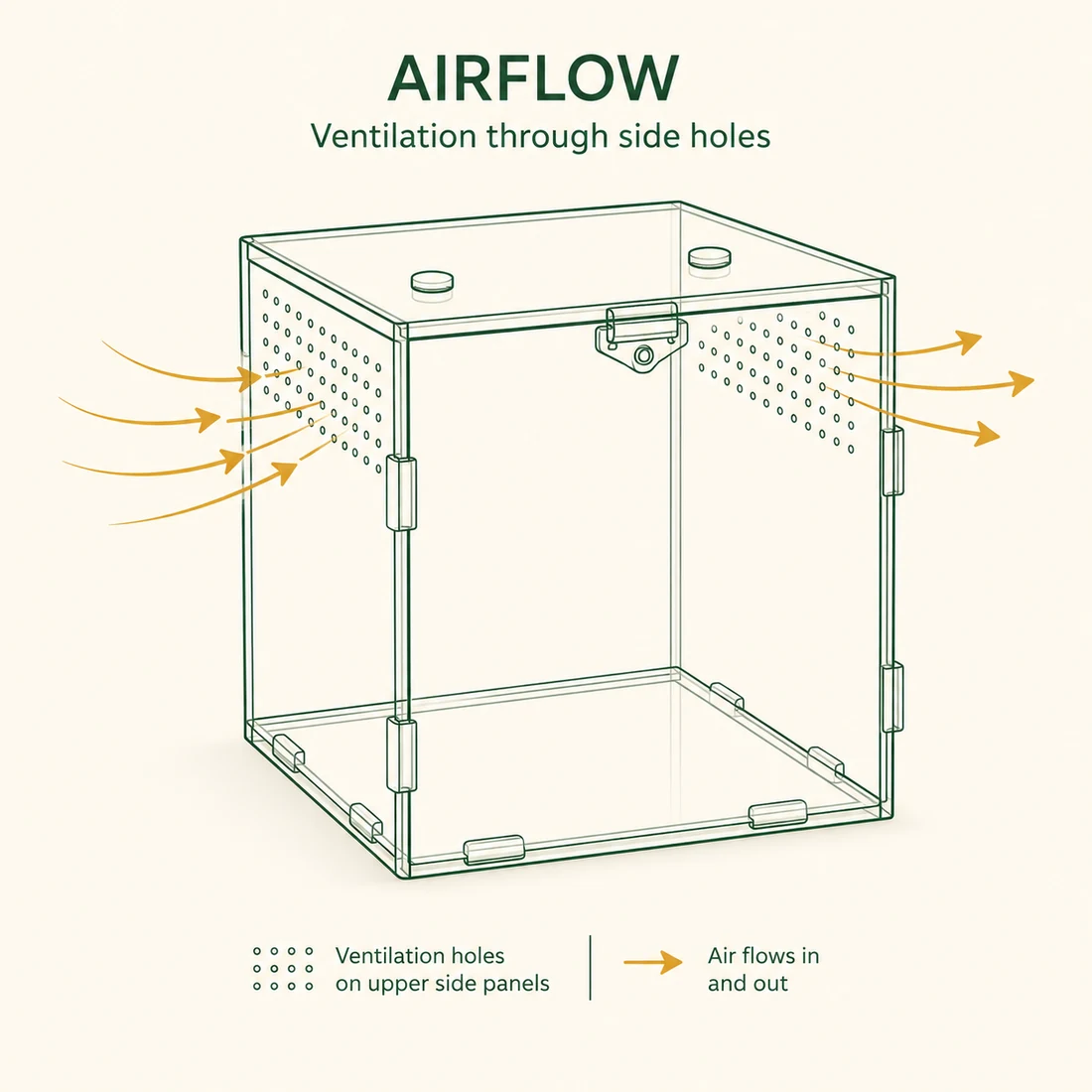
The reason acrylic terrariums can have clean, symmetrical ventilation patterns — rows of small holes or a mesh-cut panel — comes down to how the material is cut. Laser cutting works precisely on cast acrylic because the material cuts cleanly without cracking or leaving the rough, whitened edges you sometimes get cutting extruded acrylic or drilling glass by hand. That precision is also what makes a flush-fitting magnetic lid possible: the lid panel and the frame it seats into have to match closely enough for the magnets to pull them together evenly, without a visible gap on one side. A slightly warped or unevenly cut panel would show up immediately as a lid that sits crooked or doesn't seal — which is why panel-to-panel fit matters as much as clarity.
Edge bonding is the other detail that separates a well-built acrylic enclosure from a flimsy one. Panels are joined with an acrylic-specific solvent bond rather than silicone or glue, which fuses the surfaces at a molecular level rather than just sticking them together — done correctly, the seam is barely visible and structurally stronger than the panel itself. Every order is backed by our 30-day money-back guarantee.
Caring for an acrylic terrarium long-term
Keeping cast acrylic clear for years comes down to two habits that keepers commonly report working well: cleaning with water or a mild, non-ammonia solution on a soft cloth, and avoiding long, direct sun exposure that can gradually yellow lower-grade acrylic. Neither of these is a guarantee — acrylic quality varies by manufacturer. This is general material-care guidance, not a durability warranty, and it's separate from the animal-husbandry question of substrate or humidity, which we address on our tarantula enclosure and spider tank pages.
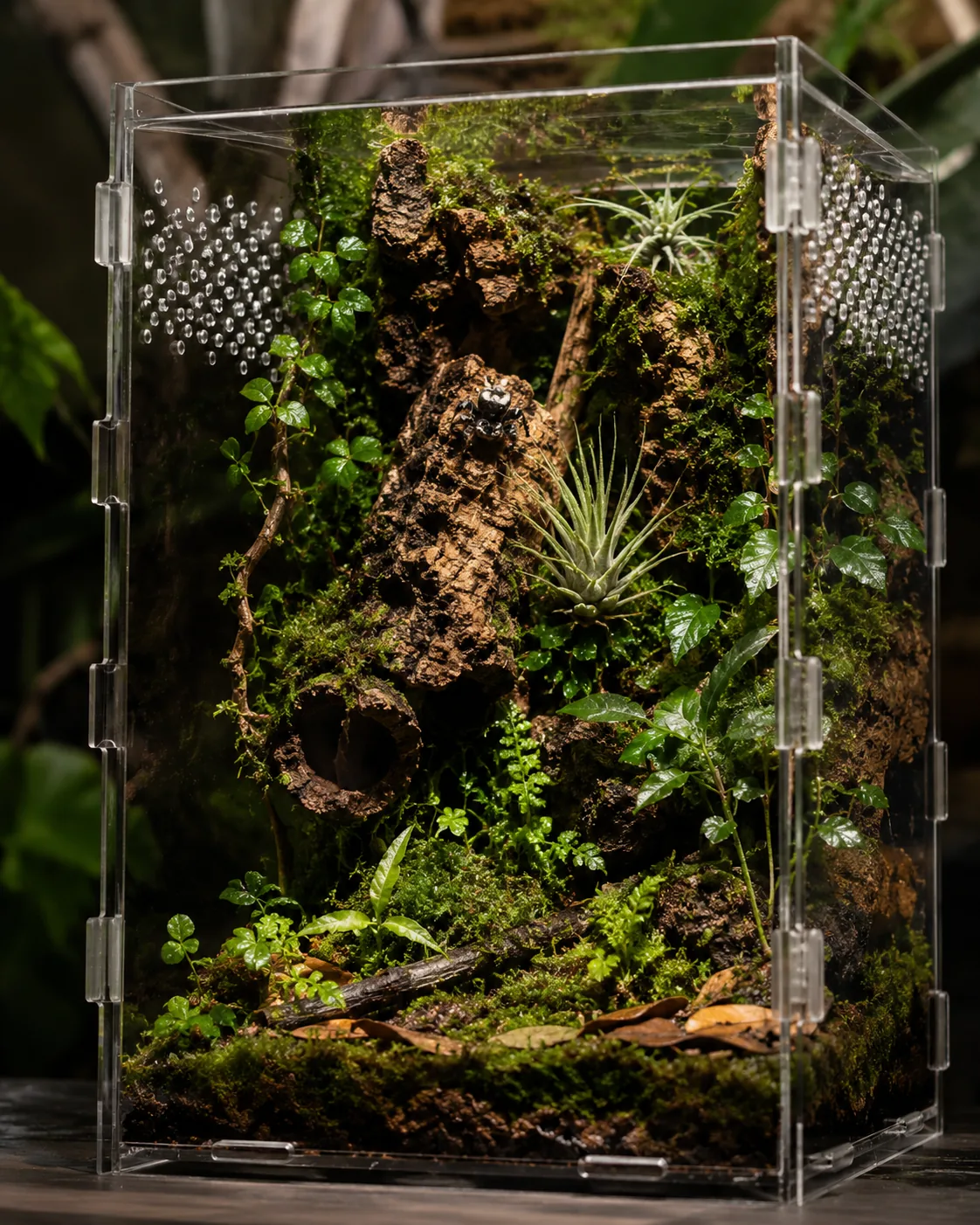
Average rating across 130 verified buyers of ArachNest's acrylic enclosures
— ArachNest verified buyer data, 2026
Acrylic enclosure units sold across the S/M/L range
— ArachNest sales data, 2026
Is an acrylic terrarium right for your setup?
If you want a light, shatter-resistant enclosure with crystal-clear viewing and built-in, precisely-cut ventilation, cast acrylic is a strong fit — that's the whole reason ArachNest builds around it. If your priority is maximum scratch resistance over a decade of heavy-handed cleaning, glass still has the edge on that one dimension. Most keepers housing jumping spiders, slings, or small invertebrates land on acrylic because the weight, safety, and ventilation advantages outweigh a maintenance habit (soft cloth, no abrasives) that's easy to build.
free shipping to 18 countries · 30-day money-back guarantee
Acrylic terrarium FAQ
Is acrylic better than glass for a terrarium?
Acrylic is lighter and far more resistant to shattering than glass, and it can be laser-cut with precise ventilation patterns. Glass holds up better against scratches over years of cleaning. For small invertebrate enclosures, most keepers prioritize acrylic's weight and safety advantages.
Does acrylic yellow or cloud over time?
Lower-quality or UV-exposed acrylic can yellow slightly over years. Keeping the enclosure out of direct, prolonged sunlight and cleaning with water rather than harsh solvents helps cast acrylic stay clear for longer.
How do you clean an acrylic terrarium without scratching it?
Use a soft microfiber cloth with water or a mild, non-ammonia cleaner. Avoid paper towels and abrasive pads, which are the most common cause of fine surface scratches on acrylic panels reported by keepers.
What thickness of acrylic is used for small terrariums?
Small invertebrate terrariums typically use cast acrylic panels in the low-millimeter range — thick enough to resist flexing and impact at this scale, while staying light enough to handle easily. ArachNest uses cast acrylic sized for stability at each of its three enclosure sizes.
Related pages
See the full product line on our jumping spider enclosure homepage. If you're housing a tarantula sling or juvenile, our tarantula enclosure page covers sizing by life stage. Prefer the casual term? See spider tank. For material-adjacent setup topics, our upcoming invertebrate enclosure guide and bioactive spider enclosure guide go further into substrate and planting choices. Real buyer photos and the full rating breakdown are on our reviews page.