· Dana Whitfield
What Size Enclosure Does a Jumping Spider Need?
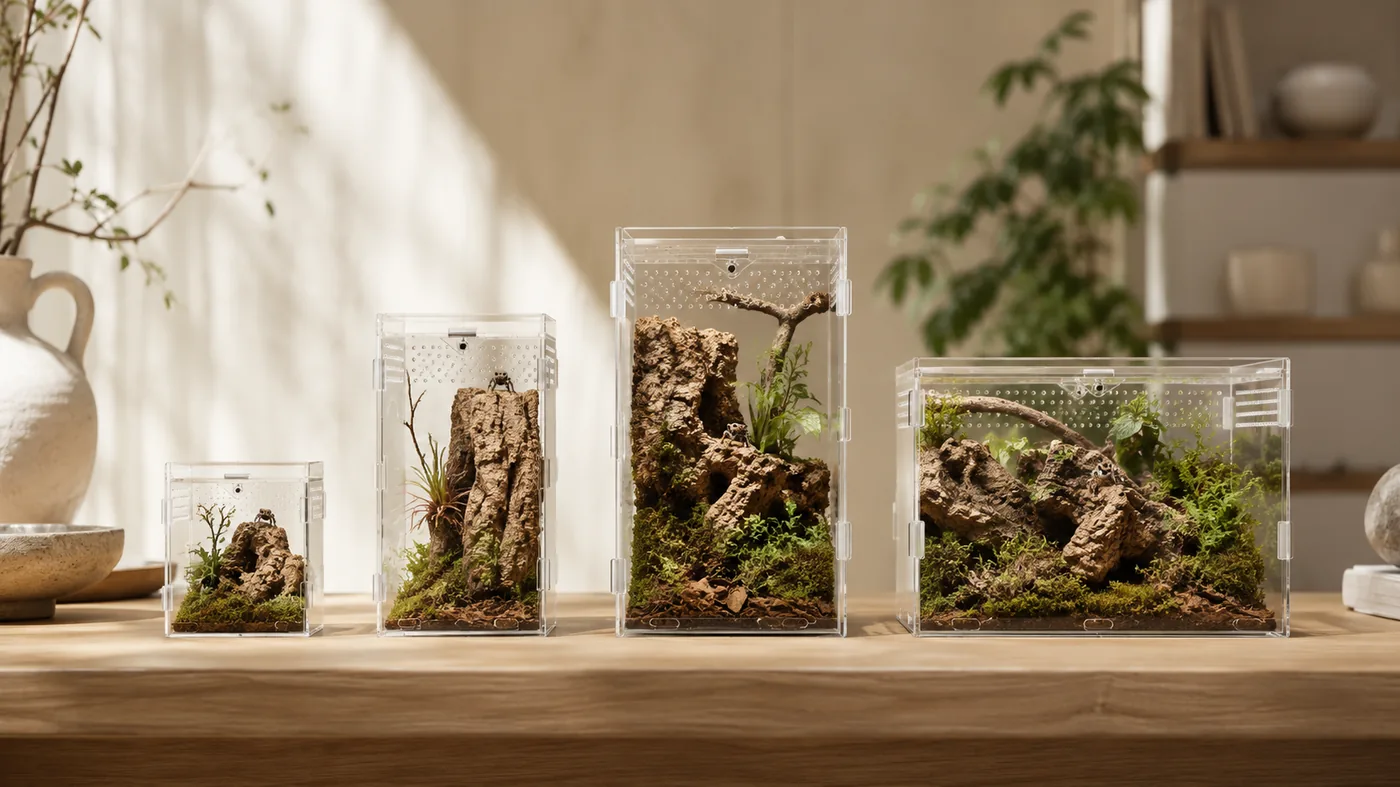
Sizing an enclosure for a jumping spider is not reptile sizing scaled down. What decides whether a box works is not its volume but how far a visual hunter a centimeter across can see and reach inside it. This page is the arbitration, from your spider to a set of interior dimensions. Already know your size? Our terrarium setup guide handles substrate, planting and misting.
How do you get from the spider to a set of dimensions?
Body length is the figure species descriptions give you, but it undersells the animal by half once the legs are out. A spider with a 13mm body can cover close to 30mm extended, and it is that footprint the enclosure has to hold, plus room to pivot and launch.
| Stage | Typical leg span | Floor width keepers aim for | Interior height |
|---|---|---|---|
| Spiderling, first weeks out of the sac | Under 5mm | 4-5cm | 6-8cm |
| Juvenile | Roughly 10-20mm | 8-10cm | 10-15cm |
| Adult, mid-sized species | Roughly 20-30mm | 10-12cm | 12-20cm |
| Adult, large female Phidippus | Roughly 30-40mm | 12-15cm | 20-25cm |
Leg span ranges above are figures cited across keeper communities. Treat them as a frame to adjust against your own animal.
What does a freshly emerged spiderling need?
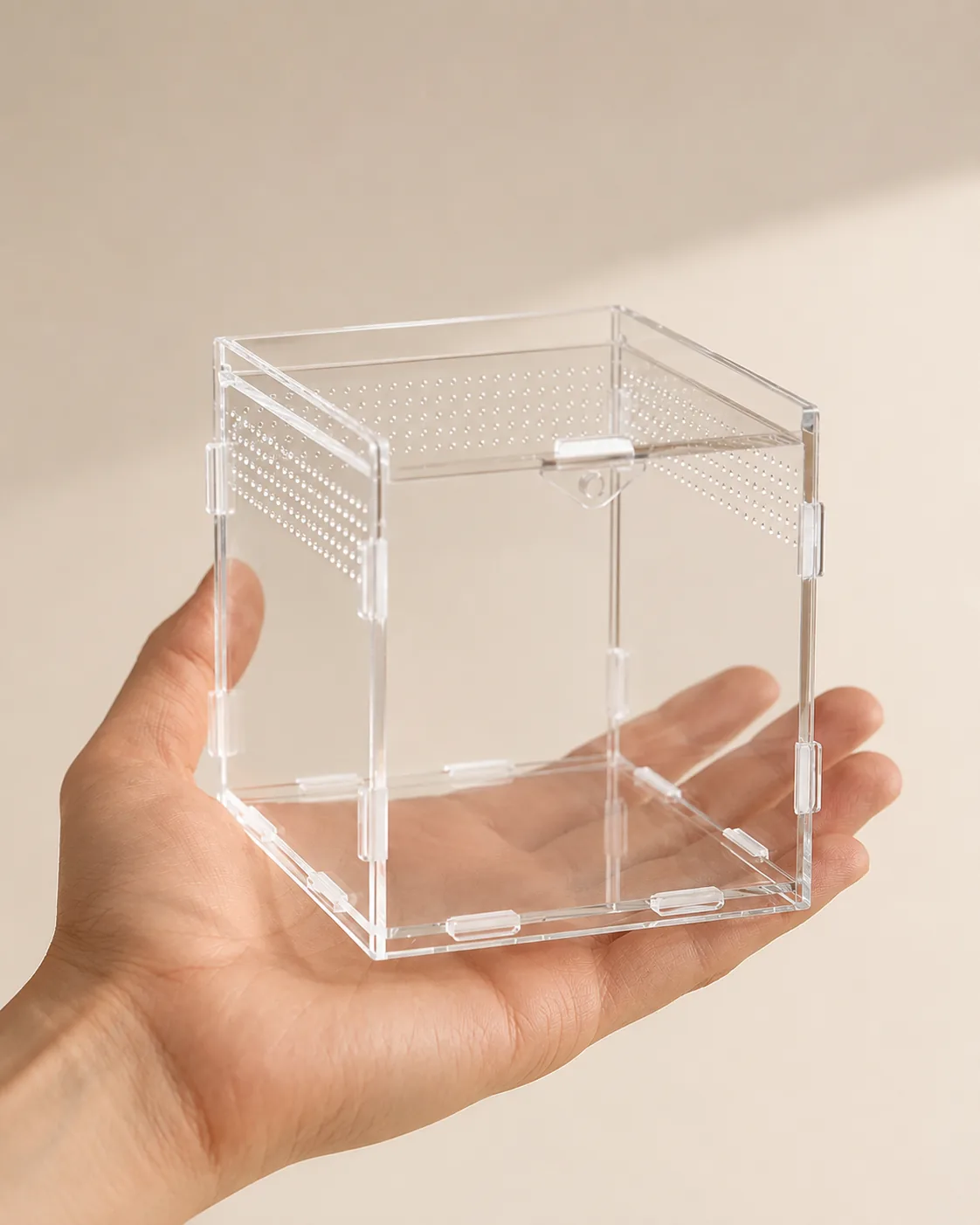
Our smallest enclosure is a 10x10x10cm cube, sized for a spider that has grown into it rather than for a three-millimeter spiderling. Keepers usually start slings in a small ventilated container, a vial or a modified deli cup, and step them up as they molt. Prey has to stay inside the spider's visual range or it is not eaten, and every opening has to be measured against the animal you have now, since a gap that holds an adult can pass a sling.
One UK buyer wrote that the cube is "Lovely and great for baby jumping spiders or other small creatures." Fair, with one qualifier: "baby" covers a lot of ground. A well grown juvenile settles into the Small cube. A spider that emerged last week does not.
When do you move a jumping spider up a size?
A spider in premolt seals itself into a silk retreat, stops feeding and often looks dull. That is the worst moment to move it, and where keepers report the most losses. Wait until it has molted and taken food again. Most people do this once or twice across a captive life, since each move costs the spider its retreat.
How much height does a jumping spider actually need?
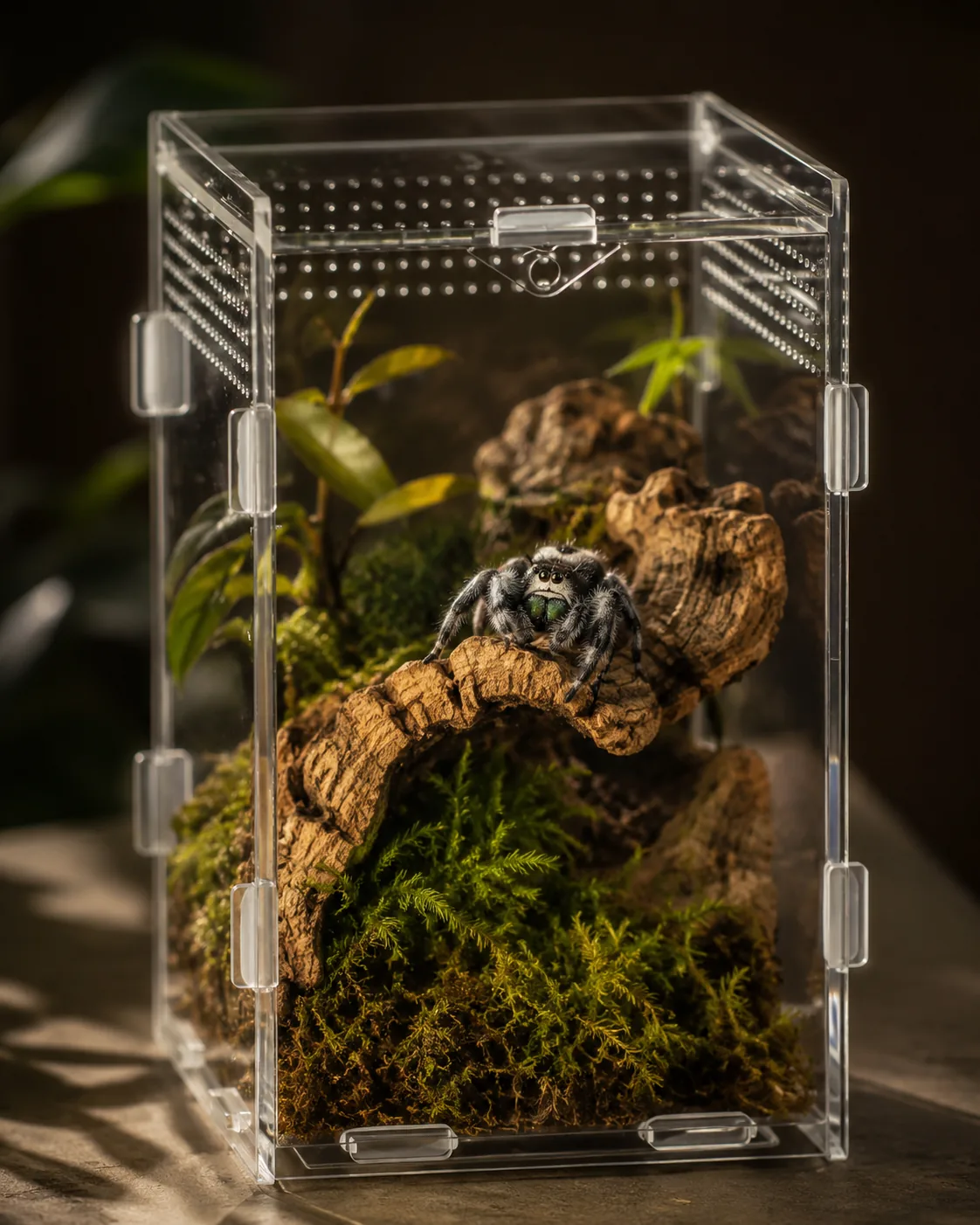
Height here is not for the view. It is where the retreat goes, and a molt low down in a crowded enclosure is the scenario keepers most often describe going wrong. That is the argument for the taller formats: 20cm and 25cm interiors let a spider build high and still leave the floor usable. Where the cork bark goes is covered in the setup guide.
Does the species change the answer?
Body length in millimeters of an average adult Phidippus audax, one of the most commonly kept jumping spiders in the US
Described jumping spider (Salticidae) species worldwide, the largest spider family by species count
So a species name is a starting point, not an answer. A mature female regal jumper and a male bold jumper are both "a jumping spider" and not the same sizing problem. Housing something outside Salticidae? Our invertebrate enclosure guide covers how floor space and substrate depth trade off for burrowers.
What goes wrong when the size is off?
An oversized enclosure also costs you the reason you bought a clear one: a spider with too much unused volume picks a corner and stays there. Too small fails the other way, with decor crowding the floor and the retreat ending up low.
Leg span multiple keepers commonly use as a minimum floor width when sizing a jumping spider enclosure
— Keeper community practice, compiled 2026, 2026
Which ArachNest size fits which stage?
| Size | Dimensions | Best fit | Price |
|---|---|---|---|
| Small | 10 x 10 x 10 cm | Well grown juvenile, mid-sized adult | $29.95 |
| Medium | 12 x 12 x 20 cm | Adult that climbs and builds high | $44.95 |
| Large Tall | 15 x 15 x 25 cm | Large adult female, maximum height | $59.95 |
| Large Wide | 25 x 15 x 15 cm | Spread-out decor, separate feeding zones | $59.95 |
Every size uses the same cast acrylic panels, magnetic lid and laser-cut ventilation, so moving up changes the dimensions and nothing else. A German buyer put it plainly: "Nice plexiglas cube for small creatures like young spiders. Easy to install without instructions." Specs and the size selector are on the jumping spider enclosure page. Orders ship in 6-10 business days with a 30-day money-back guarantee.
Average rating across 130 verified buyers of the ArachNest enclosure line
— ArachNest verified buyer data, 2026
Everything above reflects sizing practice shared among amateur keepers, not veterinary guidance or a welfare guarantee. Species, sex and growth move the numbers, so cross-check a care sheet.

Dana Whitfield · Invertebrate Keeper, 6 yrs
Dana has kept jumping spiders and other small invertebrates for six years.
Jumping spider enclosure size FAQ
What size enclosure does an adult jumping spider need?
For a single adult of a commonly kept Phidippus species, keepers typically land between a 10x10x10cm cube and a 12x12x20cm tall enclosure. The rule is about three times the leg span in floor width.
Can a jumping spider enclosure be too big?
Yes, and it is the more common mistake. Jumping spiders hunt by sight over short distances, so live prey released into a large enclosure can stay out of range for a long time.
Does a jumping spider need a tall enclosure or a wide one?
Height tends to matter more. Jumping spiders build a silk retreat and molt inside it, usually high up, so vertical room with something to anchor to beats extra floor area. Wide formats suit spread-out decor.
How often do you move a jumping spider to a bigger enclosure?
Most keepers rehome once or twice over a captive life, not after every molt. Move the spider once a molt has hardened and it is feeding again, never while it is sealed in a retreat.
Related pages
These sizes live on our jumping spider enclosure homepage, and under their casual name on spider tank. The material is covered on acrylic terrarium. After picking a size, the terrarium setup guide covers assembly and the spider habitat guide what goes inside.