· Dana Whitfield
How Do You Clean a Jumping Spider Enclosure?
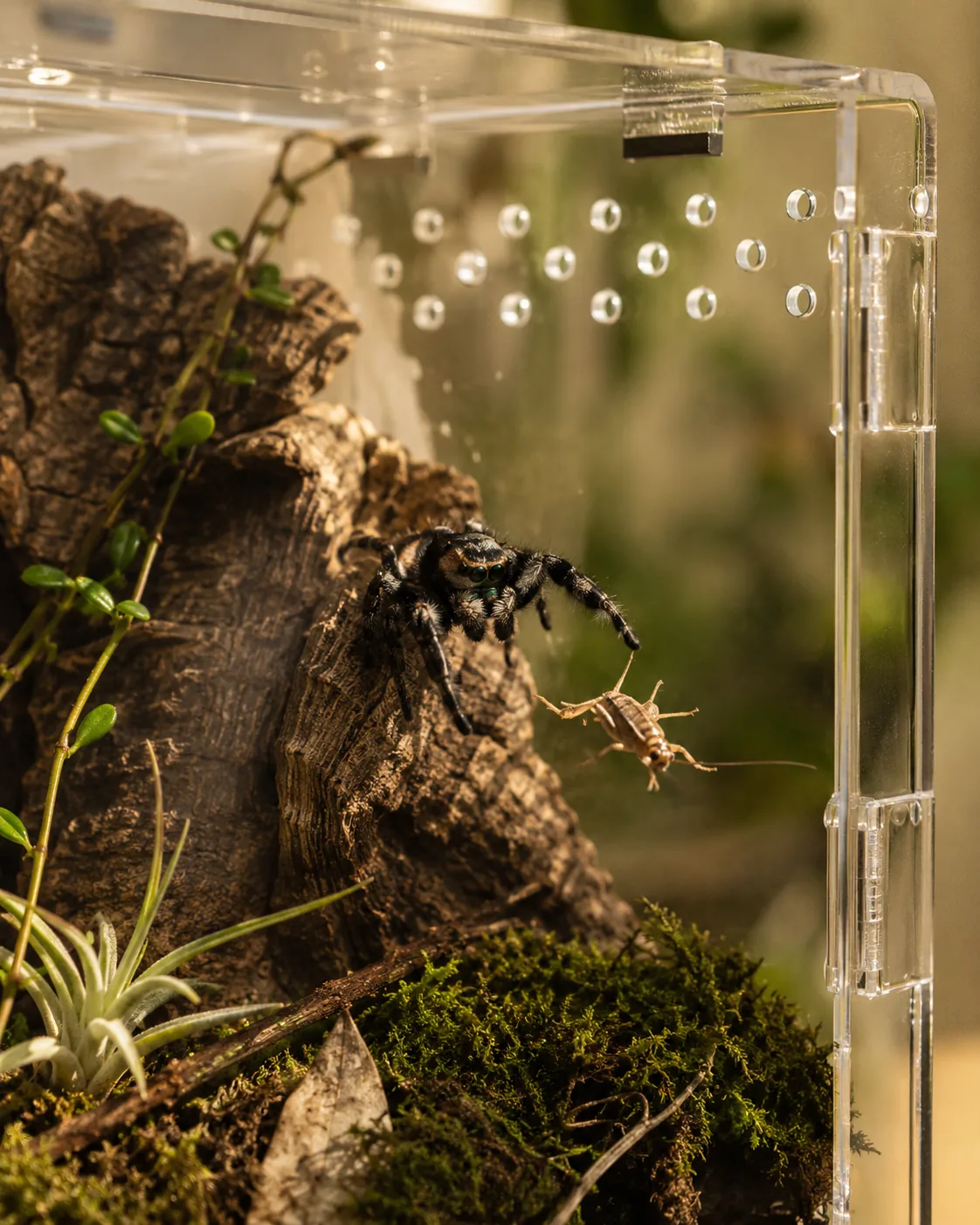
Most cleaning advice for small enclosures is written about the box: which cloth, which solution, which pad will not scratch. We cover that on the pages about the material itself. But it is not the part keepers get wrong. What goes wrong is throwing out the wrong thing, opening the enclosure at the wrong moment, and treating a small terrarium like a fish tank that needs stripping on a rota. This page is about the decisions, not the cloth.
What actually needs removing — and what does not?
A jumping spider does not foul an enclosure the way a rodent or a reptile does. It is a small predator eating small prey, and the volume of genuine waste it produces over weeks is tiny. Almost everything that looks untidy is either the spider's own structure or a leftover from a meal.
| What you are looking at | Take it out? | Why |
|---|---|---|
| Dried prey remains (the drained husk left after a meal) | Yes | Attracts mites and mold as it breaks down |
| Uneaten live prey still wandering | Yes | A cricket left in with a spider in premolt is a known risk |
| Moldy leaf litter or a sour-smelling substrate patch | Yes, that patch | Mold spreads through damp substrate faster than it clears on its own |
| Small dark waste marks on the panels | Yes | Cosmetic, and the reason you bought a clear enclosure |
| The shed molt (exuvia) | No — keep it | It records leg span and sex; see below |
| The silk retreat | No | It is the spider's home and its molting chamber |
| Loose anchor lines across the cork and plants | No | Structural for a spider that navigates by silk |
That line is worth learning, because a tidy-minded owner clearing "cobwebs" out of a jumping spider enclosure has just demolished the animal's house. Silk in a salticid enclosure is not neglect. It is construction.
Why is the molt the one thing you never throw away?
New keepers routinely mistake a molt for a dead spider, panic, then bin it once they find the live animal watching from the corner. The exuvia is the only record you get of a growth step. Laid out flat it gives a leg span measurement without touching the spider — the figure that decides whether the current enclosure still fits, as our enclosure size guide explains.
It is also the cleanest evidence that a molt went well. A complete shed, with the legs pulled through rather than left behind, tells you the spider cleared the process — the most fragile moment in its life. An intact molt on the floor of the enclosure is the good outcome, not a mess to clear up.
Where does the spider go while you clean?
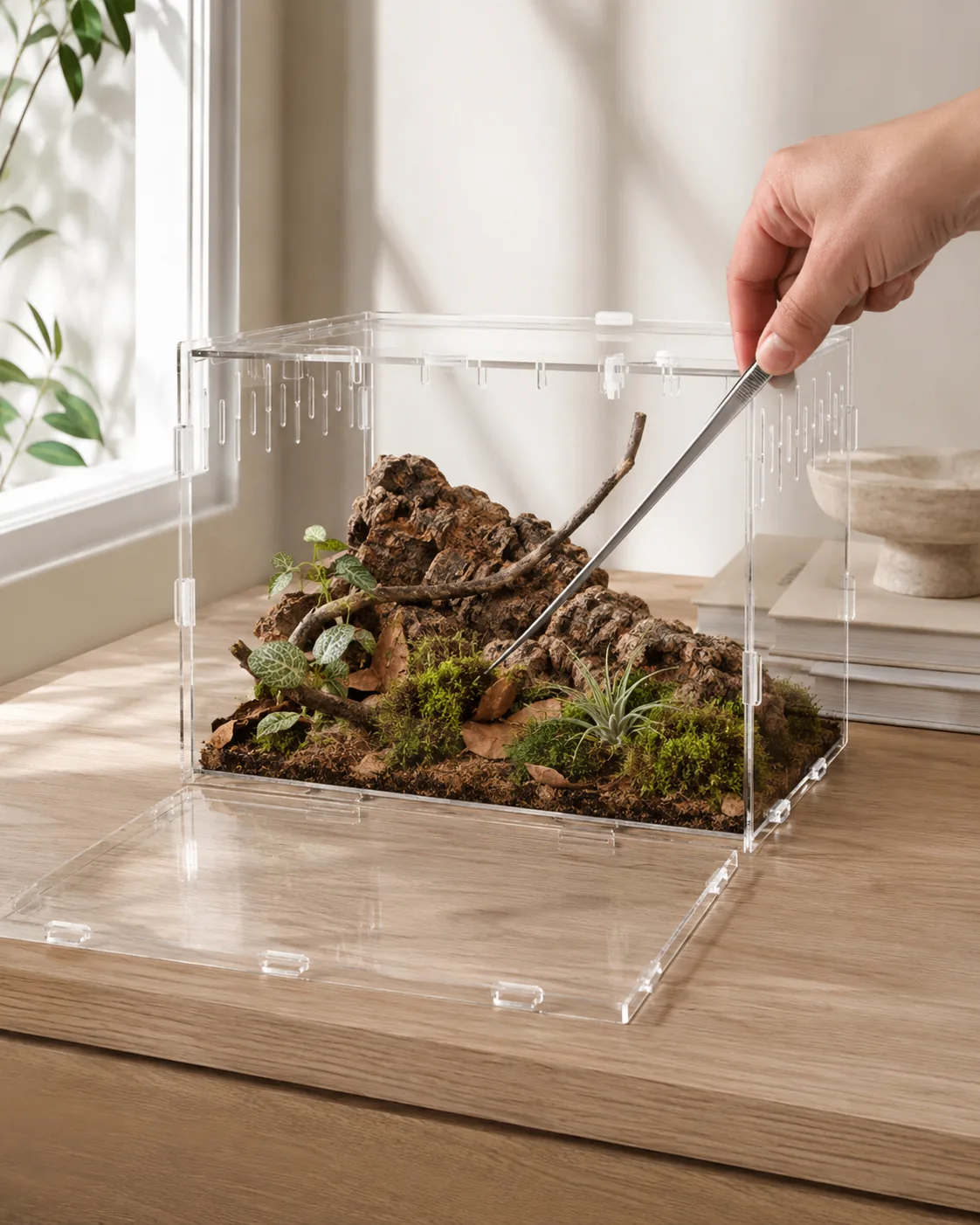
Here patience replaces technique. A jumping spider is a visual animal with good depth perception and a strong startle response, and it will track a pair of tongs the whole way down. Move at a pace it can watch. Keepers use long tongs rather than short ones for distance: it keeps your fingers out of the enclosure entirely, so you are never blocking the opening with a hand while a fast, jumping animal decides to explore it.
Two things make this easier, and both are enclosure features rather than tricks. Clear panels let you find the prey husk and confirm where the spider is sitting before you open anything — one buyer put it plainly, saying it "is crystal clear once the protective film is removed." And a lid that opens one-handed leaves the other free for the tongs, which is why our jumping spider enclosure line uses a magnetic close.
Spot-clean or full strip-down: how do you tell?
Observation beats a schedule because the variables are not yours to fix in advance. Substrate depth, how much you mist, how humid your room runs and the species you keep all move the answer. That is why there is no fixed number for this, and why the spider tank page frames it the same way: spot-clean as needed rather than stripping the enclosure on a fixed rota.
Described jumping spider (Salticidae) species worldwide — the reason no single cleaning schedule fits them all
The signals keepers act on are easy to check through a clear panel: substrate that stays visibly wet long after misting, a patch of white fuzz that keeps returning after you lift it out, tiny pale mites in the litter, or a smell when you open the lid. Any of those points at the substrate rather than the surface, and that is when replacing the layer earns its disruption. Absent them, lifting out husks is doing the job.
Typical substrate depth in a small jumping spider enclosure — a shallow layer is what a spot-clean is working through
— Keeper community practice, compiled 2026, 2026
It helps that the layer is shallow: no deep, moisture-heavy bed of the kind a burrowing species needs, so there is far less to go wrong and far less to replace. Our spider habitat guide covers how that layer gets chosen.
When should you leave the enclosure alone entirely?
This matters more than any cleaning method, because it is the part with an animal-welfare cost attached. A spider in premolt seals up, dulls in color and stops taking food, and molting is where keepers report the most losses. Vibration, a lid opening, tongs near the retreat — none of it helps, and none of the tidying is urgent. A prey husk is not going anywhere.
Two exceptions keepers do act on: live prey and active mold. A cricket left loose with a sealed, defenceless spider is the classic reason to open the lid anyway, and a spreading mold patch will not pause out of politeness. Both are quick removals nowhere near the retreat, not a general clean. The same premolt timing decides when a spider can be moved up a size, which our enclosure size guide covers from the rehoming side.
What about the panels, the vents and the lid?
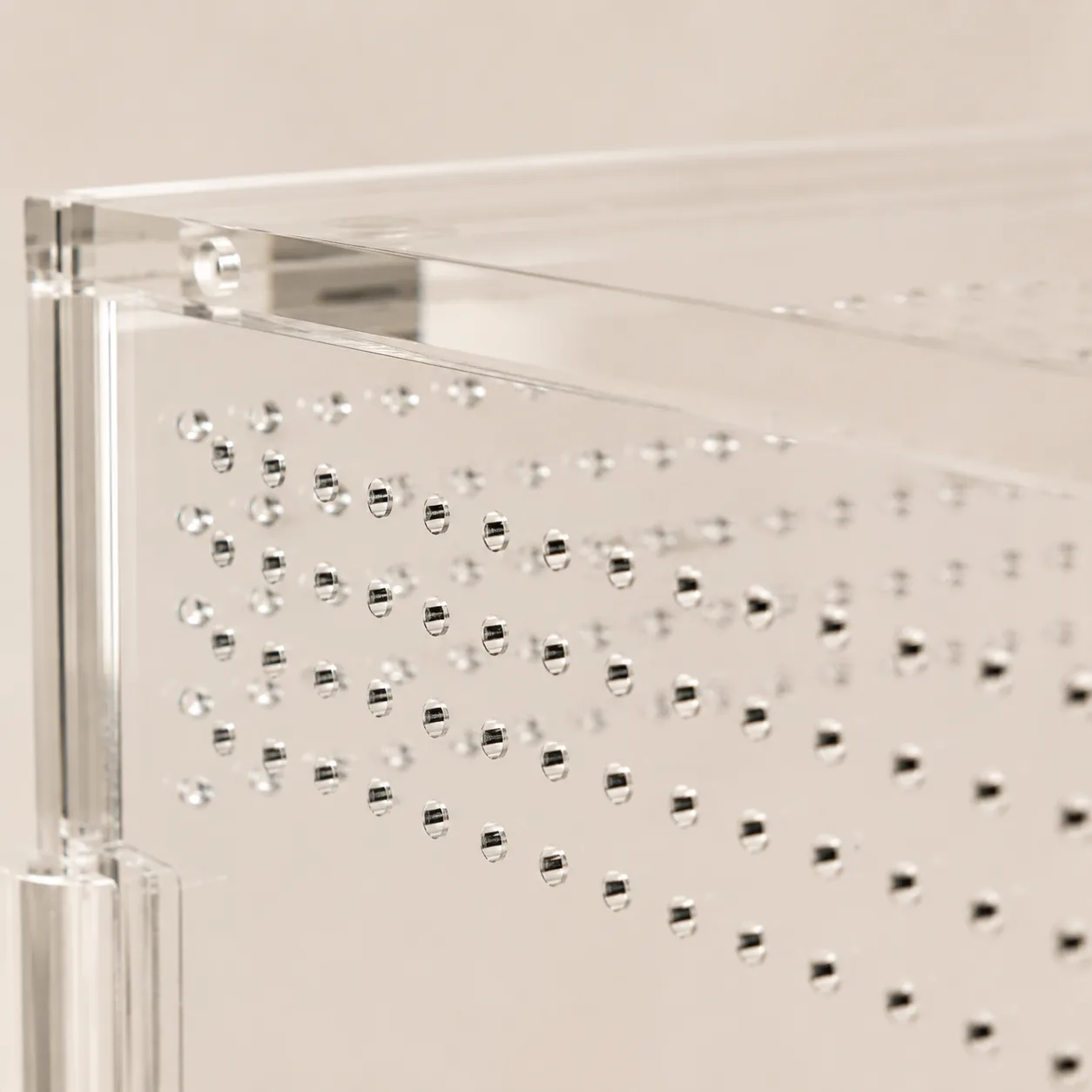
The panel part stays short here because it is covered properly elsewhere: the material and what to avoid putting on it are on acrylic terrarium, the placement side on spider tank.
The vents are the neglected part. Ventilation gets checked once, at setup, when the enclosure is empty and obviously clear — our terrarium setup guide makes that a step. Then months pass, substrate dust drifts, the spider strings silk across a panel, and a grid of small holes quietly becomes a smaller one. Nothing announces it. Looking along the panel edge-on with light behind it shows a blocked row immediately — a five-second check worth folding into every spot-clean. The lid seam collects the same debris: a lid that no longer sits flush is both an airflow change and a gap.
Does a bioactive setup change the routine?
A bioactive substrate that partially maintains itself reduces the deepest, most disruptive part of this job where it works. It will not clean the panels, clear the vents or reliably deal with a large prey husk, and it adds its own watch list: a cleanup crew that never establishes leaves a richer, damper substrate with nothing eating the mold. Our bioactive spider enclosure guide is direct about that.
Average rating across 130 verified buyers of the ArachNest acrylic enclosure line
— ArachNest verified buyer data, 2026
Everything above reflects maintenance practice shared among amateur keepers, not veterinary guidance or a welfare guarantee. Species, substrate and your home's humidity all move the answer, so cross-check a care sheet.

Dana Whitfield · Invertebrate Keeper, 6 yrs
Dana has kept jumping spiders and other small invertebrates for six years.
Jumping spider enclosure cleaning FAQ
How often should you clean a jumping spider enclosure?
Keepers work from what they can see rather than from a calendar. Prey remains and visible waste come out as they appear; a deeper clean is driven by the substrate going sour or moldy, not by a date.
Should you take the spider out to clean its enclosure?
Usually not. Common practice is to work around the animal with long tongs while it sits out on its decor, rather than handling it. Every removal costs the spider its bearings and adds a chance of a fall or an escape.
Do you throw away a jumping spider molt?
Most keepers keep it. The shed exoskeleton shows leg span and, in a mature spider, the features used to sex it. It also confirms a molt finished cleanly — not waste, and not a sign the enclosure is dirty.
Can you clean the enclosure while the spider is in its retreat?
It is the moment keepers most often avoid. A spider sealed into a silk retreat is usually in premolt, and molting is where keepers report the most losses. Tidying waits until it is out and feeding again.
Related pages
The clear panels and magnetic lid this routine assumes are on our jumping spider enclosure homepage. Setting one up from empty? Start with the terrarium setup guide. Sizing or rehoming instead? See the enclosure size guide.